How to stay warm between acting jobs
July 28, 2026 · 5 min read
Three months with nothing on the calendar. You still say you're an actor when people ask, and it's still true, but the word starts to feel like something you're claiming rather than something you're doing. Then a new project comes around, and it's the same five names again who land the roles. Because they're warm.
The story we tell about those five is that somebody decided about them. A better agent. A face that happens to be in fashion this year. One room they got into once and never had to get into again.
Some of that is true, and pretending otherwise is its own kind of lie. Access is real. So is luck, and so is looking like whatever the market wants this season. But fourteen years in, the thing I actually notice about the actors who work constantly is duller than any of that. They're warm. They're prepared, and they're at ease in themselves. They were in a room last week. They rehearsed a scene with somebody on Tuesday. When they walk into the audition, they aren't starting the engine. It's already running.
Warmth is the part of this you control, which makes it worth being precise about.
Warm is a state, not a compliment
Watch a cold actor start a session. The first ninety seconds go to admin: how loud they are today, what their hands do, where their own voice sits in a room they've never stood in. Then they start acting.
In an audition, those ninety seconds are the audition.
A warm actor skips it. They arrive mid-conversation, because whatever they were doing on Tuesday is still in the body, and the first line has somewhere to land.
This isn't about memory and it isn't about talent. It's responsiveness: the reflex of taking in what another person just said and letting it change what you do next. Two weeks without another voice playing opposite you and you start playing your idea of the scene instead of the scene itself. You get very good at your own reading and completely deaf to anyone else's.
Which is why "keep your instrument tuned" is useless advice. You can't run a scene at yourself. Understudies have to try, for months at a time, and how they learn and hold a track is the most extreme version of this problem anyone deals with. But you can stay warm with blablabla.
What staying warm between jobs actually takes
Three things, and each one is the problem.
Material you didn't write, because your own instincts are exactly what needs interrupting. Another voice, out loud, at a tempo you don't set. And a reason to do it on a Wednesday when nobody is waiting for anything from you.
Each of those has always cost something. A class costs money and meets on a schedule somebody else picked. A scene partner costs a favor, and the favor gets heavier every time you ask. I wrote about that specific dread in the 11pm version of it, because the guilt of asking is the real reason most actors stop, not laziness.
The third is the worst. The reason to do it today is usually a job, and the job is the thing you don't have.
So the actors who stay warm tend to be the ones already working. Warm gets you the job, the job keeps you warm, and from underneath that loop looks exactly like being chosen. It isn't. It's a supply problem, and supply problems can be fixed.
Nine scenes, free, in your language
So we wrote some.
There are nine original scenes in the free practice library. Two characters each, forty to fifty-odd lines, long enough to hold a real turn rather than a mood. Two siblings finding the key to a door their mother swore never existed. Best friends and a screenshot in the wrong group chat. Two adult siblings clearing their father's flat, fighting over whether to delete his last voicemail. A detective's husband rehearsing her alibi until one wrong detail shows they were each covering for the other.
They were written to be rehearsed. Again and again. And we keep writing more, so the library keeps growing.
Every one is readable without an account. You can rehearse either role in the app, and the other part is already recorded in 33 languages, so the voice answering you speaks yours with its own rhythm instead of English wearing a costume. If you work in a language that isn't your first, that difference is most of the battle.
Download them as PDF or Fountain. Bring them to class: the license covers instructor-led workshops, so your teacher can run a whole room on them. Shoot practice selftapes with them. The only things it rules out are selling them, producing them commercially, or claiming somebody official wrote them.
Nothing expires. There's no card and no trial clock. They're nine scenes that will still be there in March.
Then shoot it
Rehearsing keeps responsiveness alive. Camera work is a separate muscle and it goes cold on its own schedule.
The gap between how a scene feels and how it reads is where most tapes are lost, and you can't close that gap by thinking about it. You close it by watching yourself do it, repeatedly, when nothing is at stake. A practice scene is the cheapest place in the world to discover that your bravest choice reads as nothing, or that you drop your voice at the end of every thought.
Set the phone up the way you would for a real one. One device handles all three jobs: camera, reader, teleprompter. Run the checklist even though nobody's watching, because the point is that it becomes automatic before the tape that matters.
Then delete the take. That's allowed. The take was never the point.
A week that fits a real life
Twenty minutes, two or three times a week, beats three hours on a Sunday. Staying warm takes persistence, not a sprint.
A version that works: Monday, read a new scene once and mark where it turns. Wednesday, run it on your feet, out loud, both parts answering you, no camera. Friday, shoot it once and watch it once. New scene next week.
If you want more out of the Monday pass, breaking the scene down properly is what makes a practice scene worth more than a read-through. And if what's actually gone rusty is your ability to make choices fast, cold reading is a trainable skill and these scenes are good material for it, precisely because you've never seen them before.
You'll get through the nine eventually. Then bring your own material and blablabla does the same job on it, speaking the other parts and waiting however long you take, because it never cuts you off. Rehearsing that way doesn't cost anything and there's no limit on how many scenes you keep. Recording selftapes doesn't cost anything either, signed in or not. Two scenes of your own come with the full recorded voices; past that the voices built into your phone carry it, or Pro opens the rest.
But start with the nine. They're already voiced and already waiting, which removes the last excuse.
The same five names
I still notice them. That hasn't gone away and I don't think it's supposed to.
But the distance between them and everyone else is smaller and more boring than it looks from underneath. They aren't better than you on a Wednesday in a dry spell. They just haven't stopped, mostly because they've never had to ask anyone's permission to keep going.
That's the only part we could actually hand over. So it's free, in your language, and it isn't going anywhere. Pick one tonight and say it out loud. Nothing else here is complicated.
Common questions
By keeping the actor's body alive, not the lines. Rehearse a scene out loud with another voice playing opposite you, two or three times a week, twenty minutes at a time. The reflex of taking in what someone else said and letting it change what you do next lands better than memorized text does, and it is the thing an audition actually tests.
Material you did not write, so your own instincts get interrupted. There are nine free original two-person scenes in the blablabla practice library at /practice, free to read and rehearse in the app with no account. Class scenes, published plays, and old sides you never booked all work too. The point is that somebody else chose the words.
Yes, and there is no trial attached to them. Nine scenes, no signup, no card, with the other role already recorded in 33 languages. The license covers personal rehearsal, instructor-led classes and workshops, and non-commercial practice selftapes. It does not cover reselling them or producing them commercially.
Twenty minutes, two or three times a week, beats three hours on a Sunday. Staying warm is not a sprint, it is a marathon. Short and frequent keeps you there. One long session a month does not.
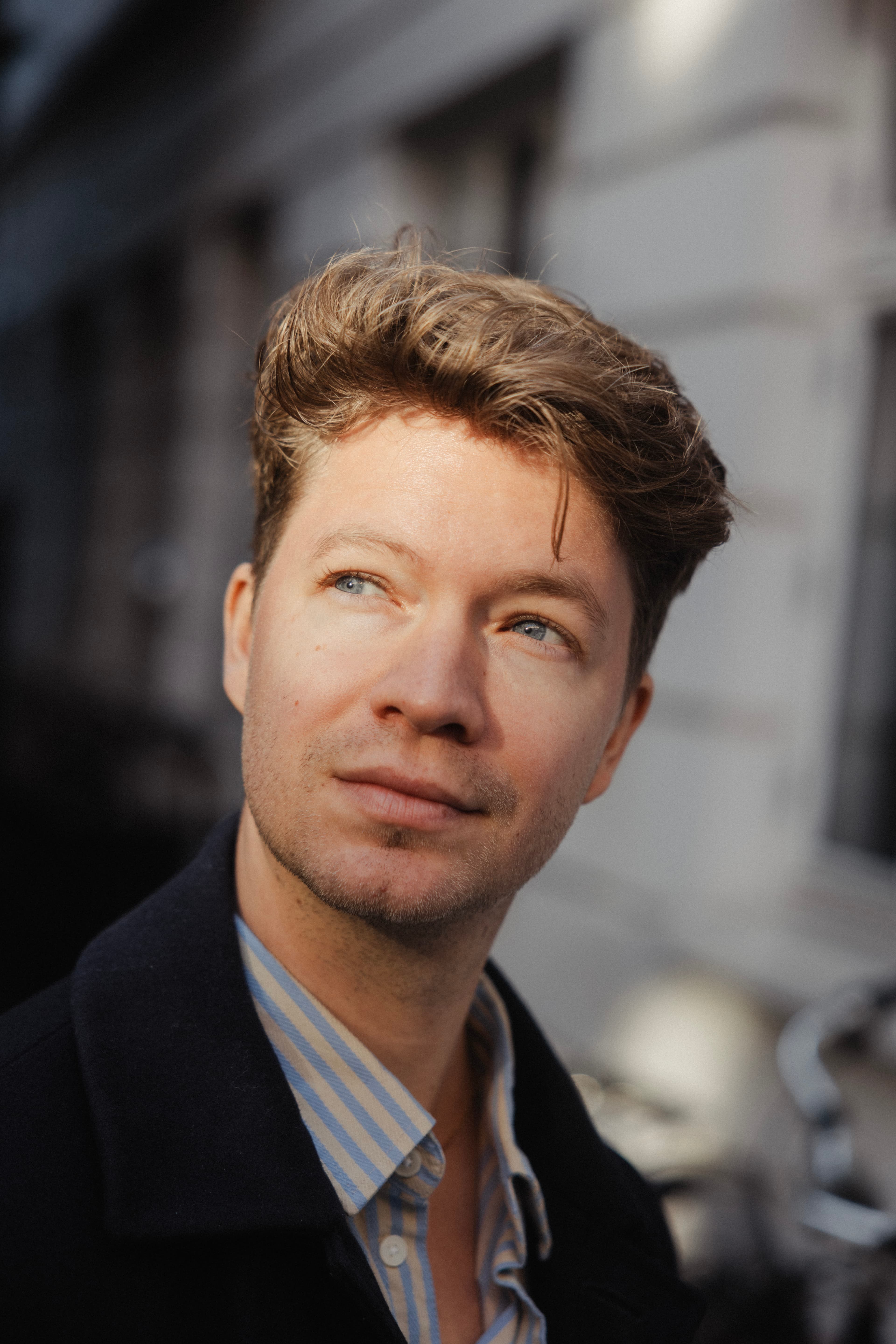
Elias Munk is a Danish actor and the creator of blablabla. Fourteen years in the business. Built blablabla because rehearsal shouldn't be the difficult part of being an actor. Performance should.
blablabla reads the other characters' lines and waits for yours.
Two voiced scenes free. No sign-up required.
Keep reading
What is a scene partner? (and what to do when you don't have one)
A scene partner is the other actor in your scene, the one whose lines you answer. What that means in class, in the room, at home, and when there is nobody.
How understudies and swings learn a track
Understudies learn a track from the back of the room and go on with no notice. How to hold one track, or six, and keep it warm across a long run.
How to prepare for scene study class when your partner cancels
Scene study assumes you and your partner rehearse before class. Usually you meet once. Here is how to do the work anyway and walk in with something.
Character development for actors: the part you do alone
Most character development exercises need a room full of people. Here is what the work looks like when it is just you, your sides, and a Tuesday night.
Disney Channel audition scripts: family scenes
What family-adventure audition sides can test, how to play wonder without performing cute, and three free original two-person scenes to rehearse.
HBO audition scripts: prestige-drama scenes
How to play status, restraint, silence, and a late turn in an adult prestige-drama audition, with three free original two-person scenes.